
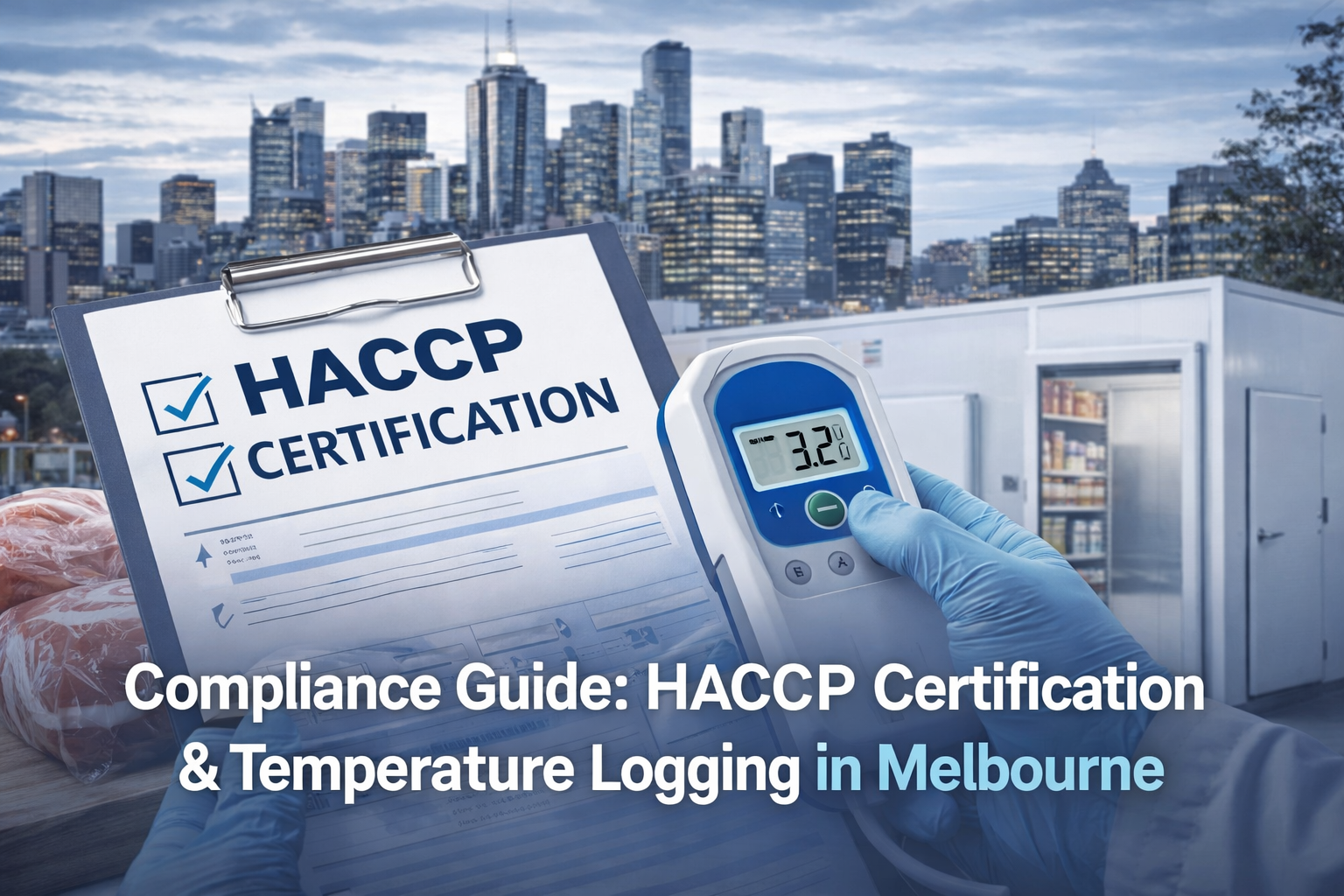
As a food business, you’re undoubtedly aware of the importance of HACCP Certification Melbourne and the need for temperature logging to ensure that your business meets all the required Food Standards Australia New Zealand (FSANZ) food safety guidelines.
The certification and temperature logging ensure that the food items you store, prepare, and sell to your customers are safe for consumption and free from spoilage and harmful bacteria. Let’s take a closer look at what HACCP certification is and how to ensure you meet your obligations.
What is HACCP
HACCP stands for Hazard Analysis Critical Control Points. It’s a standard that is employed by food safety programs all around the world and was first developed by NASA, along with a select group of food safety specialists. Essentially, seven critical principles are covered by this standard, namely:
- A potential hazard analysis – for example, bacterial contamination.
- Critical points in the storage and food preparation where hazards can be eliminated.
- Minimum and maximum temperatures for safe food storage.
- The constant monitoring of these critical temperatures.
- Corrective actions that should be taken if the temperatures fall outside the safe range.
- Up-to-date and comprehensive record keeping, including any corrective actions.
- An audit of your food safety program at least once a year.
Why Accurate Temperature Logging Matters
Melbourne businesses must keep food at safe temperatures to prevent spoilage and ensure that the food remains safe for the end consumer. For this, accurate temperature logging compliance of your storage facilities is important.
Temperature Monitoring Prevents Bacterial Growth
Constant monitoring and logging of temperatures ensures that no critical hazard points occur during storage. For example, if there is a rise in temperature during the night due to a failure, it can be quickly addressed, and unsafe food can be disposed of.
Temperature Logging Is Necessary To Comply With HACCP Certification
As part of any food business’s HACCP Certification, temperature logging is a requirement to comply with regular audits.
Equipment Failure Or Required Maintenance Can Be Easily Detected
Constant temperature logging can quickly alert you to an equipment failure or the need to do some maintenance checks if the logging shows some significant temperature changes.
How Coolroom Design & Build Affects Compliance
A well-designed, built-in coolroom or mobile coolroom manufactured using quality insulated panels with a reliable refrigeration system and proper sealing will ensure that temperatures inside the facility are kept within the optimum ranges. Of course, correct installation also ensures that your business is able to meet the required HACCO temperature stability, which will be reflected in the logging data.
On the other hand, a poorly constructed coolroom made with inferior materials could result in hot spots, moisture issues, inefficient cooling, and more frequent temperature hikes.
Tips For Maintaining Compliance
Ensure Accurate Records Are Kept
To maintain your HACCP compliance, make sure that accurate temperature records are kept on file and ready for auditors when needed.
Regularly Calibrate Your Thermometers And Sensors
To ensure optimum temperatures are maintained, it’s important to calibrate your thermometers and sensors regularly.
Have Regular Audits
Whether you do spot checks yourself or engage a third party to check your logs, this must be done consistently to ensure food safety at all times.
Construct A Plan Of Action For When Temperatures Exceed The Range
In case of equipment failure or spikes in temperature, you need to have an action plan that staff are fully versed in to remove food that may be spoiled and attend to repairs as quickly as possible.
Test Seals Regularly
Apart from your refrigeration system, you also want to check the seals on your coolroom to make sure they have not degraded or need replacement.