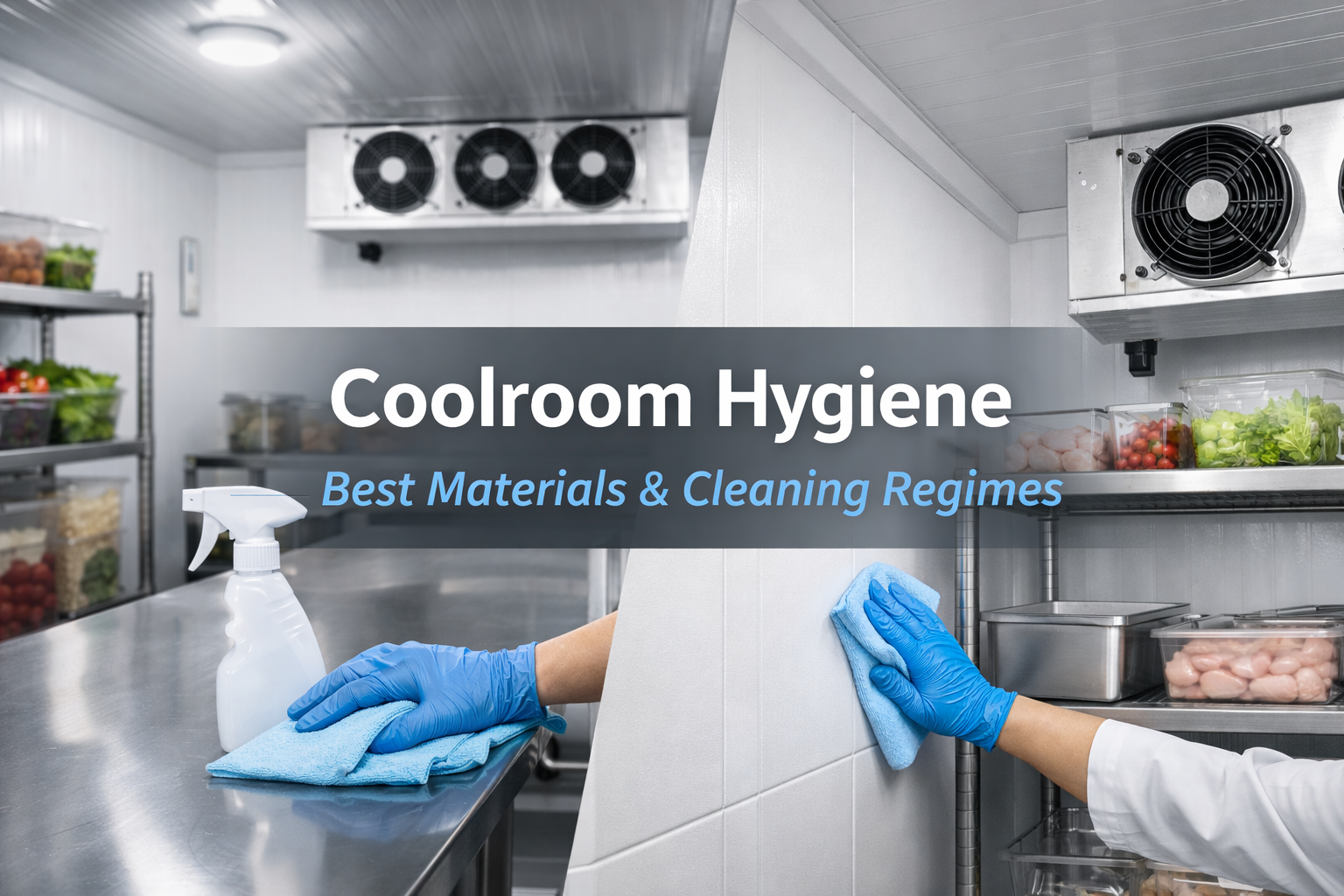
For any type of business in the food industry, coolroom hygiene is of paramount importance to avoid food contamination, ensure food items are safe for human consumption, and to comply with Australian Food Safety Standards. To ensure adequate coolroom hygiene, there are proper cleaning regimes to follow, but it all starts with the right equipment. With over 50 years of industry experience, Burton Industries is fully conversant with hygiene-focused design principles, and we use these when manufacturing all of our coolroom panels.
Why Coolroom Hygiene Matters
Coolrooms provide a damp and humid environment, which is often conducive to bacterial growth if proper hygiene is not maintained. This can result in food contamination and spoilage, which means food is no longer suitable for human consumption and must be disposed of.
On top of that, it’s important for food businesses to comply with food safety standards as regulated by Food Standards Australia & New Zealand (FSANZ). Among the many different rules for safe food storage are that storage facilities such as coolrooms need to have easy-to-clean surfaces that can be kept free from dust, dirt, and other contaminants, as well as being protected from pest infestations.
Best Materials For Hygienic Coolrooms
To keep food safe, coolrooms should be constructed from materials that offer smooth, non-porous surfaces that are easy to clean and can resist bacterial buildup. That’s why high-density EPS coolroom panels with their core insulation and steel facings are the preferred choice.
The food-grade wall and ceiling panels used in our coolroom kits are made from easy-to-clean materials with antimicrobial finishes. Plus, they’re vermin-proof for added food safety. We use advanced coolroom panel technology to construct all of our coolroom components, which results in fully-functioning coolrooms that are efficient, practical, and easy to keep spotlessly clean at all times. What this means for our customers is less time spent on cleaning and maintenance, allowing more time to spend on food preparation and service.
Cleaning Regimes: How & When To Clean
Your regular cleaning regime can be broken down into easy-to-follow daily, weekly, and monthly tasks. According to the NSW Food Authority, “Keeping a cold store premises clean means all floors, walls, ceiling, fixtures, fittings and equipment, are free of garbage, recycled matter, food waste, dirt, grease, and other visible matter.”
Daily / Ongoing Tasks
- Sweep and mop with food-safe detergents
- Wipe handles, door frames, and seals
- Check and remove spills immediately
Weekly Tasks
- Deep clean shelving and racks
- Sanitise internal walls and floor drainage points
Monthly / Seasonal Tasks
- Remove panels if possible to access hidden dirt
- Inspect panel joins and seals
- Book a professional service check (optional)
Best Practices
- Use food-safe sanitising products
- Avoid harsh abrasives that damage surfaces
- Clean top to bottom – ceilings first and floors last
- Keep a cleaning log for compliance
Practical Tips To Maintain Hygiene
- Avoid storing non-food items, such as cleaning products, with food
- Ensure good airflow to effectively prevent condensation buildup
- Regularly inspect temperature controls and door seals
- Ensure that all staff are trained in correct cleaning procedures
For Hygienic Coolrooms & Coolroom Panels, Contact Us Today
When hygiene is so important for your food business, you want to partner with a company that can provide the best coolroom solution for your needs. At Burton Industries, we’re happy to help you to further explore our hygienic coolroom panels and kits. Why not contact us today for the perfect coolroom panel solutions or any expert advice you’re seeking?