
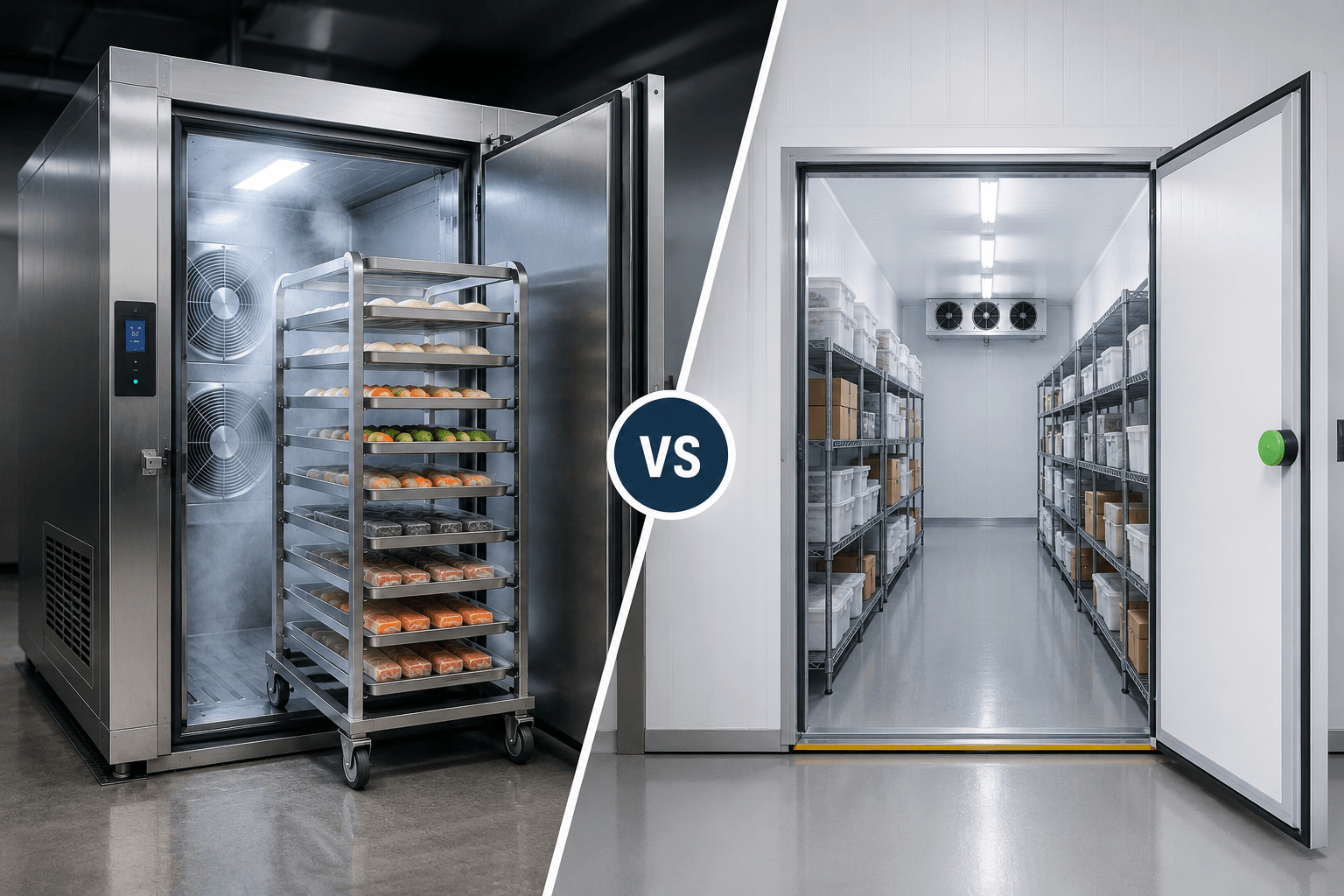
For businesses working in food production, hospitality, pharmaceuticals, or cold storage logistics, choosing the right freezing solution is critical. Two of the most common systems are blast freezers and freezer rooms — but while they may seem similar, they serve very different purposes.
Understanding the difference between the two can help improve product quality, reduce waste, increase efficiency, and ensure compliance with food safety standards.
In this guide, we explain how blast freezers and freezer rooms work, their key differences, and which solution may be best suited to your business.
What Is a Blast Freezer?
A blast freezer is designed to rapidly reduce the core temperature of products in a very short period of time. Unlike conventional freezer rooms, blast freezers use powerful refrigeration systems and high-velocity airflow to freeze products quickly and evenly.
This rapid freezing process helps to:
- Minimise bacterial growth
- Preserve food texture and quality
- Reduce moisture loss and freezer burn
- Extend shelf life
- Maintain nutritional value
Blast freezers are commonly used in:
- Commercial kitchens
- Food manufacturing
- Seafood processing
- Bakeries
- Pharmaceutical storage
👉 Learn more about our
Blast Freezer solutions:
https://www.burtonindustries.com.au/blast-freezer/
What Is a Freezer Room?
A freezer room is designed for long-term frozen storage rather than rapid temperature reduction. These insulated rooms maintain consistently low temperatures, typically below -18°C, to keep products frozen over extended periods.
Freezer rooms are ideal for:
- Bulk frozen food storage
- Warehousing and distribution
- Restaurants and supermarkets
- Commercial cold storage facilities
Unlike blast freezers, freezer rooms are not designed to quickly freeze warm products. Instead, they maintain products that are already frozen.
👉 Explore our
Freezer Room solutions:
https://www.burtonindustries.com.au/freezer-rooms/
Blast Freezer vs Freezer Room: Key Differences
| Feature | Blast Freezer | Freezer Room |
| Purpose | Rapid freezing | Long-term storage |
| Cooling Speed | Very fast | Slow/maintained freezing |
| Main Benefit | Preserves product quality | Large-scale frozen storage |
| Typical Temperature | -30°C to -40°C | Around -18°C |
| Best For | Freshly prepared products | Already frozen products |
| Common Industries | Food production, catering | Warehousing, hospitality |
Which One Is Best for Your Business?
The right solution depends on how your business handles products and inventory.
Choose a Blast Freezer If:
Your business:
- Produces or prepares fresh food daily
- Needs to rapidly cool products for food safety compliance
- Wants to preserve texture, freshness, and quality
- Handles high-value frozen products
For example, restaurants, bakeries, seafood suppliers, and meal-prep businesses often benefit significantly from blast freezing technology.
According to Food Standards Australia New Zealand (FSANZ), rapid cooling and freezing play a critical role in reducing bacterial growth in potentially hazardous foods.
Choose a Freezer Room If:
Your business:
- Requires bulk frozen storage
- Stores already frozen products
- Needs easy access to large inventory volumes
- Operates warehousing or distribution facilities
Freezer rooms are ideal for businesses focused on frozen storage capacity and efficient stock management.
Many Businesses Benefit From Both
In many commercial operations, blast freezers and freezer rooms work together.
A common process is:
- Products are rapidly frozen in a blast freezer
- They are then transferred to a freezer room for long-term storage
This combination helps businesses maximise food quality while maintaining efficient storage capacity.
Why Panel Quality Matters
Whether installing a blast freezer or freezer room, insulated panel quality is critical for thermal efficiency and operating costs.
High-performance insulated panels help:
- Reduce energy consumption
- Maintain consistent temperatures
- Improve system lifespan
- Lower running costs
Learn more about our Coolroom Panels
For broader guidance on energy-efficient building materials, the Australian Government’s YourHome resource provides valuable information on insulation and thermal performance.
Speak With Melbourne’s Cold Storage Experts
Choosing between a blast freezer and freezer room isn’t just about temperature — it’s about operational efficiency, product quality, compliance, and long-term business performance.
At Burton Industries, we’ve been designing and manufacturing custom cold storage solutions for Melbourne businesses for over 50 years. Whether you need a high-performance blast freezer, a large-scale freezer room, or a complete integrated solution, our team can help you choose the right system for your operation.
Contact Burton Industries today for expert advice on tailored cold storage solutions.
📞 Call 03 9729 8155
🌐 Visit https://www.burtonindustries.com.au/
Frequently Asked Questions
Can a freezer room replace a blast freezer?
No. Freezer rooms are designed for storage, while blast freezers are designed for rapid freezing. Using a freezer room to freeze fresh products can reduce quality and increase food safety risks.
Do restaurants need blast freezers?
Many restaurants benefit from blast freezers, particularly businesses preparing food in advance or storing high-quality frozen products.
Are blast freezers more energy intensive?
Blast freezers use more power during rapid freezing cycles, but they can reduce waste and improve efficiency long-term.
Which is better for food safety?
Blast freezers are better for rapidly reducing temperatures and minimising bacterial growth, helping businesses meet food safety requirements more effectively.