
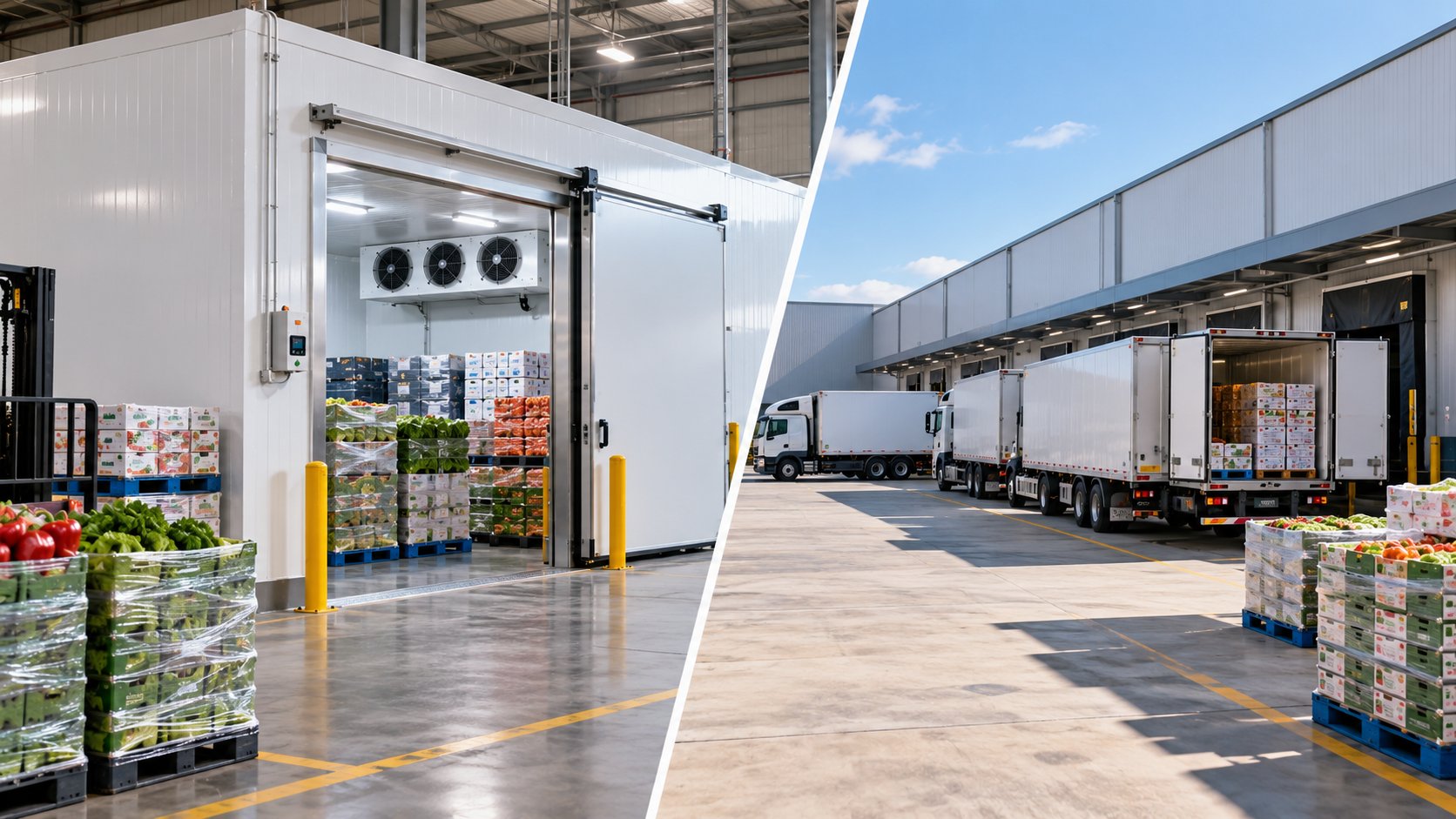
As your business grows, so does the need for reliable cold storage. Whether you’re distributing fresh produce, storing frozen foods or managing temperature-sensitive
products, choosing the right warehouse refrigeration solution can directly affect operating costs, efficiency and product quality.
Two common options are building your own warehouse coolroom or outsourcing refrigerated storage to a third-party logistics (3PL) provider.
Both have advantages, but which makes the most sense for your business? Let’s compare the costs, benefits and limitations to help you make an informed decision.
What Is a Custom-Built Warehouse Coolroom?
A custom-built warehouse coolroom is a temperature-controlled storage facility designed around your business’s specific requirements.
Unlike standard refrigeration units, custom coolrooms can be configured to accommodate large stock volumes, pallet racking, forklifts, loading areas and different temperature zones.
Using quality coolroom panels, businesses can create insulated storage environments suited to their warehouse layout and operational needs.
Custom solutions are particularly valuable for food distributors, manufacturers, wholesalers and businesses handling consistent volumes of refrigerated stock.
Option 1: Building Your Own Warehouse Coolroom
For businesses with ongoing cold storage requirements, investing in a custom coolroom offers several long-term advantages.
Advantages of Custom-Built Coolrooms
Complete control over storage conditions
You can design the facility around your products, including temperature settings, storage capacity, shelving and access requirements.
Better warehouse efficiency
A purpose-built coolroom can integrate directly with existing warehouse operations, reducing unnecessary stock movement between external facilities.
Long-term cost savings
Although construction requires an upfront investment, owning your cold storage Infrastructure can reduce ongoing third-party storage, handling and transport fees.
Flexibility and scalability
Custom layouts can accommodate specialised storage areas, multiple temperature zones and future expansion, subject to the building’s design.
Improved stock visibility
Keeping products on-site makes it easier to monitor inventory, manage stock rotation and respond quickly to customer orders.
Potential Disadvantages
Custom construction isn’t suitable for every business.
The main considerations include:
- Higher upfront capital investment
- Ongoing electricity and maintenance costs
- Responsibility for equipment servicing
- Space requirements within your warehouse
- Building approvals and installation time
However, for businesses with predictable, long-term storage demand, these costs can often be justified by improved operational control and reduced reliance on external providers.
Option 2: Outsourcing Cold Storage to a 3PL
A third-party logistics provider manages storage and, depending on the agreement, may also handle inventory management, order fulfilment and distribution.
Instead of constructing your own coolroom, you pay to use space within an existing refrigerated warehouse.
Advantages of 3PL Cold Storage
Lower initial investment
There is no need to fund the construction of your own refrigerated facility.
Flexible storage capacity
Some providers allow businesses to increase or decrease their storage allocation based on seasonal demand.
Access to existing infrastructure
Established 3PL operators may already have refrigeration systems, warehouse equipment and distribution networks in place.
Reduced facility management
The provider generally manages the building and refrigeration infrastructure, although responsibilities depend on the service agreement.
Potential Disadvantages
While outsourcing offers convenience, it can also create limitations.
- Recurring storage and handling fees
- Additional transport costs between facilities
- Less control over warehouse layout and access
- Dependence on third-party operating schedules
- Potential delays during busy distribution periods
- Limited flexibility for specialised storage requirements
For businesses moving large volumes of refrigerated products daily, these ongoing expenses and operational constraints can become significant.
Custom Warehouse Coolroom vs 3PL: Quick Comparison
| Consideration | Custom-Built Coolroom | 3PL Cold Storage |
| Upfront investment | Higher | Lower |
| Ongoing costs | Energy, servicing and maintenance | Storage, handling and transport fees |
| Temperature control | Direct control | Managed by provider |
| Warehouse access | On-site access | Subject to provider arrangements |
| Customisation | Designed for your operations | Limited by existing facilities |
| Seasonal flexibility | Depends on installed capacity | Often more flexible |
| Long-term suitability | Strong for consistent demand | Useful for variable or temporary demand |
When Does a Custom Warehouse Coolroom Make More Sense?
For many established businesses, a custom-built coolroom becomes the better option when refrigerated storage is a permanent part of daily operations.
It is particularly worth considering when:
- Stock volumes remain consistently high
- Frequent deliveries make off-site storage inefficient
- Products require specialised temperature conditions
- Your business needs direct access to inventory
- Third-party storage fees continue to increase
- You have suitable warehouse space for installation
Businesses handling both chilled and frozen products may also benefit from combining a warehouse coolroom with dedicated freezer rooms.
Don’t Overlook Energy Efficiency and Compliance
A warehouse coolroom is a long-term investment, so insulation and refrigeration efficiency should be considered from the beginning.
Correctly specified insulated panels, quality doors and properly designed refrigeration systems can help reduce heat transfer and ongoing energy consumption.
Food businesses must also meet applicable temperature-control requirements. Food Standards Australia New Zealand provides authoritative guidance on safe food storage and temperature management.
Choosing the right design from the outset can help avoid expensive modifications as your business grows.
Related Reading
For more information about planning commercial cold storage, explore these Burton Industries articles:
- Cold Storage Solutions for Fresh vs Frozen Goods
- The Hidden Costs of Inefficient Coolroom Storage
- Refrigeration Wall Panels Explained: What They Are & Why They Matter
Build a Warehouse Coolroom That Works for Your Business
Outsourcing to a 3PL can be useful for short-term or fluctuating storage requirements. However, for businesses with consistent cold storage demand, a custom-built warehouse coolroom can deliver greater control, operational efficiency and long-term value.
With more than 50 years of experience, Burton Industries provides custom commercial coolrooms, freezer rooms and insulated panel solutions designed around the needs of Australian businesses.
Whether you’re expanding a distribution centre, upgrading warehouse refrigeration or bringing outsourced cold storage operations in-house, our team can help you plan a solution that suits your space, stock volumes and future growth.
Take control of your cold storage. Contact Burton Industries today to discuss a custom warehouse coolroom and request a tailored quote.