
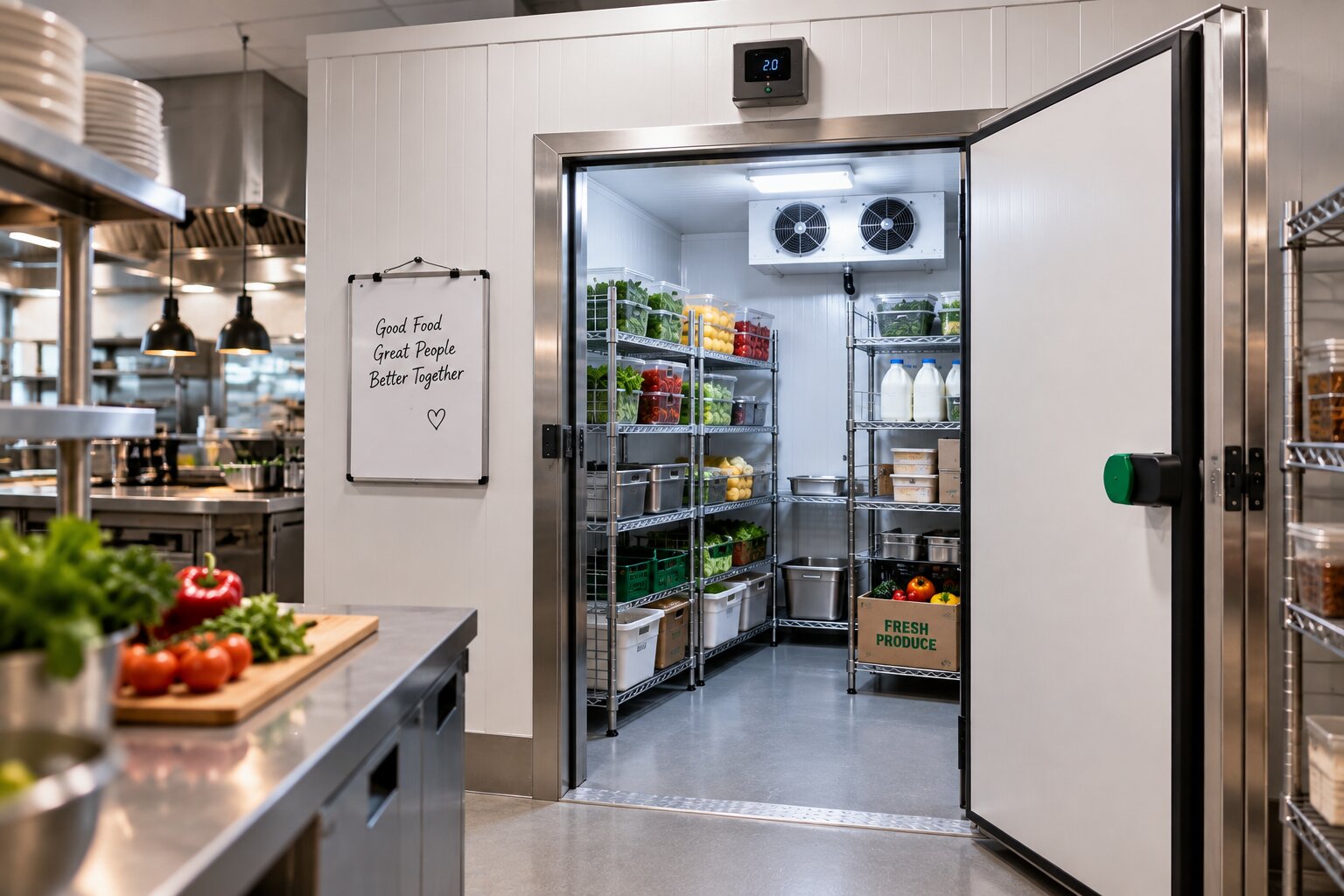
For restaurants and cafés, reliable refrigeration is fundamental to daily operations. From fresh produce and dairy to meat, seafood and prepared ingredients, a commercial kitchen can have thousands of dollars of perishable stock relying on consistent temperature control.
Choosing the right coolroom for a restaurant or café involves more than finding a unit that fits the available space. Capacity, kitchen workflow, insulation, food safety requirements and future growth should all be considered before installation.
Whether you’re opening a new venue or upgrading an existing kitchen, this guide covers the key decisions involved in creating efficient, practical cold storage.
Why Restaurants and Cafes Need the Right Coolroom
Busy hospitality kitchens place very different demands on refrigeration than a home kitchen. Deliveries may arrive several times a week, staff need frequent access throughout service, and stock levels can change considerably between quiet and busy periods.
A properly designed commercial coolroom can help you:
- Maintain safe and consistent food temperatures
- Organise ingredients more effectively
- Reduce food waste and spoilage
- Improve kitchen workflow
- Accommodate larger supplier deliveries
- Reduce reliance on multiple upright refrigerators
- Plan storage around future business growth
The objective isn’t simply to create the largest possible coolroom. It’s to design cold storage that matches how your kitchen actually operates.
How Big Should a Restaurant Coolroom Be?
There is no universal coolroom size for restaurants and cafés. A small neighbourhood café has very different requirements from a high-volume restaurant, hotel kitchen or catering operation.
Before deciding on dimensions, consider:
Daily and weekly stock volumes. How much refrigerated food do you typically hold between deliveries?
Delivery frequency. Venues receiving smaller daily deliveries may require less storage than businesses purchasing ingredients in bulk.
Menu. A café serving coffee, pastries and light meals will have different requirements from a restaurant storing meat, seafood, dairy, sauces and prepared dishes.
Peak periods. Allow capacity for weekends, functions and seasonal trading rather than sizing solely around an average weekday.
Future growth. A coolroom that is already close to capacity when installed can quickly become a bottleneck.
Importantly, don’t calculate capacity based on filling every available shelf. Cold air needs room to circulate effectively. Food Standards Australia New Zealand (FSANZ) also cautions against tightly packing or overloading refrigeration because restricted airflow can affect cooling performance.
Plan the Coolroom Around Your Kitchen Workflow
Location can be just as important as size.
Ideally, staff should be able to move ingredients efficiently from delivery and storage areas into preparation and cooking zones without unnecessary movement through the kitchen.
Think about:
- Proximity to food preparation areas
- Access from delivery/loading areas
- Door swing and surrounding clearance
- Staff traffic during busy services
- Shelf positioning and aisle width
- Separation of raw and ready-to-eat products
For example, raw meat and seafood should be stored separately or below ready-to-eat foods to reduce the risk of cross-contamination.
A well-planned layout makes stock easier to locate, rotate and replenish while helping the kitchen operate more efficiently during peak service.
Don’t Compromise on Coolroom Panels
Insulation is at the heart of an efficient coolroom.
High-quality coolroom panels create the thermal envelope that separates the refrigerated environment from a hot commercial kitchen.
Quality insulated panels can help:
- Maintain more stable internal temperatures
- Limit unwanted heat transfer
- Reduce demand on refrigeration equipment
- Control condensation when correctly specified and installed
- Create durable, easy-to-clean internal surfaces
Panel thickness and specification should be matched to the intended operating temperature and application rather than selected on price alone.
Understand Restaurant Food Safety Requirements
Temperature control is particularly important for hospitality businesses.
FSANZ states that potentially hazardous foods generally need to be stored at 5°C or colder, unless the business can demonstrate another safe system. These foods include meat, poultry, seafood, dairy products, cooked rice and pasta, egg products and many prepared foods commonly found in restaurant kitchens.
Restaurants handling potentially hazardous food also need an accessible thermometer accurate to within 1°C to check actual food temperatures.
For current requirements and practical guidance, the Food Standards Australia New Zealand food temperature guide is an excellent resource for hospitality operators.
Depending on the business and food being handled, additional requirements under Standard 3.2.2A may also apply, so operators should confirm the requirements relevant to their premises.
Do You Need a Coolroom, Freezer Room or Both?
This is an important distinction.
A coolroom is primarily intended for chilled products, whereas a freezer room provides long-term storage for frozen stock. A busy restaurant may require both.
If your menu relies heavily on frozen meat, seafood, desserts or pre-prepared products, having dedicated frozen storage can prevent the chilled coolroom from becoming overcrowded.
Burton Industries’ kitchen freezer room solutions can be designed alongside chilled storage to create a more practical cold-storage setup.
Restaurants that cook food in batches should also consider how food is cooled. FSANZ requires potentially hazardous cooked food being stored for later use to cool from 60°C to 21°C within two hours and then from 21°C to 5°C within a further four hours, unless a validated alternative process is used. A standard coolroom should not automatically be assumed to be suitable for rapidly cooling large quantities of hot food.
Features Worth Considering
Small design decisions can make a significant difference to daily usability.
When planning your restaurant or café coolroom, consider:
- Adjustable food-grade shelving
- Durable, easy-clean wall and ceiling surfaces
- Non-slip flooring
- Good internal lighting
- Quality door seals and hardware
- Temperature monitoring
- Accessible refrigeration equipment for servicing
- Shelving layouts that encourage FIFO stock rotation
The door deserves particular attention. In a busy restaurant, it may be opened hundreds of times throughout a working week. Correct placement and good seals help minimise unnecessary cold-air loss.
Design for Hygiene and Easy Cleaning
Restaurant coolrooms need to be easy to clean, not merely cold.
Smooth internal surfaces, accessible shelving and sensible floor layouts make routine cleaning easier. Food should also be protected from contamination, and storage areas should remain clean, dry and pest-free.
For a deeper look at this area, Burton Industries’ Coolroom Hygiene: Best Materials and Cleaning Regimes guide is useful reading for hospitality operators.
Avoid These Common Setup Mistakes
Some of the most expensive coolroom problems begin during planning. Watch for:
- Choosing a room that’s too small for peak stock levels
- Blocking airflow with overcrowded shelving
- Poor door positioning
- Insufficient insulation
- Failing to allow for future growth
- Mixing raw and ready-to-eat foods without appropriate separation
- Treating a storage coolroom as rapid-cooling equipment
- Neglecting access for cleaning and maintenance
Thinking through these issues before construction is far easier than trying to correct them once a commercial kitchen is operational.
Related Guides for Hospitality Businesses
If you’re planning or upgrading commercial cold storage, you may also find these Burton Industries articles useful:
- Commercial Kitchen Freezer Rooms: Design Guide
- Coolroom Hygiene: Best Materials and Cleaning Regimes
- How Much Does a Coolroom Cost in Melbourne?
- Refrigeration Wall Panels Explained: What They Are & Why They Matter
- Blast Freezer vs Freezer Room: Which Is Best for Your Business?
You can explore more practical cold-storage advice in the Burton Industries blog.
Planning a Coolroom for Your Restaurant or Cafe?
The best restaurant coolroom isn’t simply the biggest system that fits your premises. It should be designed around your menu, stock volumes, deliveries, kitchen workflow, food safety obligations and plans for future growth.
With more than 50 years of experience, Burton Industries designs and manufactures commercial coolroom and freezer solutions for hospitality and food businesses across Melbourne and Australia.
Whether you’re fitting out a new café, expanding a busy restaurant or replacing an ageing cold-storage system, Burton Industries can help you determine the right size, panel specification and configuration for your operation.
Contact Burton Industries today to discuss your restaurant or café coolroom and request a tailored quote. Call 03 9729 8155.